


THe GO8 and the european union
The European Union is Australia’s largest research partner and third-largest trading partner. For the Group of Eight, Europe is central to advancing Australia’s research excellence, innovation capability and global competitiveness.
In an increasingly complex geopolitical environment, collaboration with trusted partners is more important than ever. Australia and the European Union share a commitment to knowledge, innovation, open inquiry and the research collaboration needed to address global challenges.
The Group of Eight has long championed deeper research and innovation ties between Australia and Europe. As a national research asset responsible for 70% of Australia’s university research, the Go8 played a pivotal role in securing Australia’s association with Horizon Europe, including through a sector-leading financial contribution that demonstrated Australia’s commitment to partnership and collaboration. This was a nation-building investment that reflected both the scale of the opportunity and the unique capacity of the Go8 to act in Australia’s national interest.
In March 2026, Australia and the European Union concluded negotiations on a landmark package of agreements, including an Australia-EU Free Trade Agreement, a Defence and Security Partnership, and Australia’s association with Horizon Europe, the world’s largest research and innovation programme. Together, these agreements will strengthen economic ties, deepen strategic collaboration and unlock new opportunities for researchers, industry and communities.
The EU is the Go8’s most significant international research partner. Go8 and European researchers co-authored 14,400 research papers in 2024, making Europe our strongest global research collaborator.
Horizon Europe
Horizon Europe is the world’s largest research and innovation programme, bringing together governments, universities, industry and researchers to tackle major global challenges and develop the technologies that will shape the future.
With a budget of €94 billion, the program represents a transformational opportunity for Australian research and innovation. It will enable Australian researchers, universities and businesses to participate more deeply in international research partnership, access larger collaborative projects and contribute to setting global research priorities.
For the Group of Eight, Horizon Europe is particularly significant because it aligns with our role as Australia’s leading research university network. As the universities responsible for 70% of Australia’s university research, the Go8 is uniquely positioned to ensure Australia captures the full benefits of association, translating international collaborations into discoveries, technologies, skills and economic outcomes that benefit the nation.
The benefits extend well beyond universities. Horizon Europe will strengthen Australia’s innovation ecosystem, accelerate commercialisation, support new industries and deepen collaboration between researchers, business and government. It will help create high-skilled jobs, strengthen sovereign capability and ensure Australia remains connected to the world’s leading sources of knowledge and innovation.
Australia’s association with Horizon Europe is not simply a research agreement. It is a strategic investment in the nation’s future competitiveness, resilience and prosperity, and a powerful example of how the Go8 leverages its research strength to deliver outcomes of national significance.

Partnership with the European Australian Business Council (EABC)
The European Australian Business Council (EABC) is the leading organisation dedicated to strengthening economic, trade and investment ties between Australia and the European Union.
The relationship between the Go8 and the EABC reflects a shared commitment to strengthening Australia’s research, innovation and economic links with Europe. The Go8 Chief Executive, Vicki Thomson, serves as Deputy Chair of the EABC, underscoring the close alignment between Australia’s leading research universities and the broader Australia-EU relationship.
Together, the Go8 and EABC advocated for more than a decade for both an Australia-EU Free Trade Agreement and Australia’s association with Horizon Europe. Those efforts culminated in 2026 with the conclusion of negotiations on the Free Trade Agreement, Defence and Security Partnership and Australia’s association with Horizon Europe.
The partnership continues to champion deeper collaboration in research, innovation, trade and investment, recognising that Australia’s future prosperity increasingly depends on strong engagement with like-minded international partners.

The SCOPE project
The SCOPE project (Surface-COnfined fast-modulated Plasma for process and Energy intensification in small molecules conversion), funded under Horizon 2020 through a six-year, €16 million ERC Synergy Grant, enabled the University of Adelaide to pioneer plasma-based processes for sustainable chemical manufacturing.
This long-term, large-scale investment allowed the team to develop new materials and processes, test energy efficiency, and explore applications in green ammonia, nano-fertilisers, and biomass extraction. The project not only advanced fundamental science but also catalysed new markets, generated high-impact publications, and supported the creation of commercial spinouts.
It also contributed directly to the establishment of the ARC Centre of Excellence in Plants for Space, demonstrating effective knowledge transfer and scalability.


BornToGetThere Program
The BornToGetThere program, led by the University of Queensland’s Cerebral Palsy and Rehabilitation Research Centre, has transformed early detection and intervention for infants at high risk of cerebral palsy—particularly in First Nations communities and low-resource settings such as Sri Lanka and Georgia.
Funded through Horizon Europe, the program developed and tested the culturally adapted LEAP-CP intervention, across seven international sites. UQ led the randomised controlled trial phase (RCT), contributing IP, training frameworks, and health economics expertise. The program has delivered measurable improvements in early childhood disability care and public health outcomes.
Without Horizon Europe, this work would not have been possible in low-resource countries. Domestic funding constraints have limited the program’s ability to scale, forcing reliance on philanthropic support.

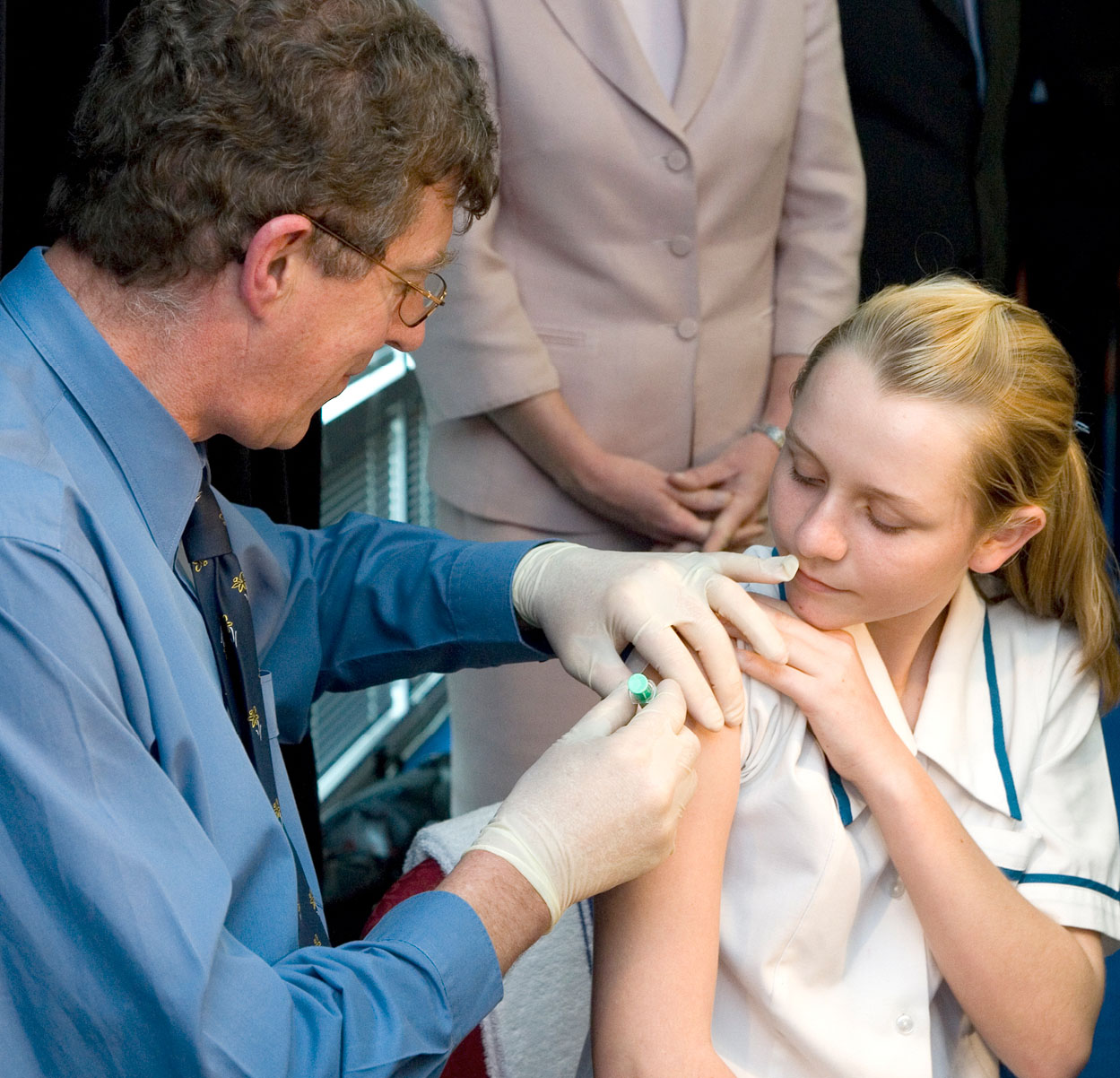
Towards a ‘variant proof’ COVID-19 vaccine
The University of Sydney is a lead partner in a US$19.3 million global consortium funded by the Coalition for Epidemic Preparedness Innovations (CEPI) to develop a ‘variant-proof’ COVID-19 vaccine using a protein subunit platform. The project aims to deliver broad protection against current and future SARS-CoV-2 variants, while contributing to CEPI’s global adjuvant library—a critical resource for rapid pandemic response.
While CEPI funding has supported early-stage development, access to Horizon Europe will enable the University of Sydney to:
– Accelerate innovation in vaccine design and delivery.
– Expand clinical trials across Europe and the Indo-Pacific
– Deepen partnerships with EU research institutions.

Revolutionising Skin Cancer Diagnostics
The iToBoS (Intelligent Total Body Scanner for Early Detection of Melanoma) project, led by the University of Girona with the University of Queensland as a key partner, is revolutionising skin cancer diagnostics through the development of a robotic full-body scanner and AI-driven personalised risk assessment tools.
Supported by €11.7 million in Horizon Europe funding and co-investment from the NHMRC, the project has created a diverse imaging dataset from Australia, Spain, and Italy, and advanced the use of explainable AI in melanoma detection.
With Australia’s high melanoma incidence, The University of Queensland provided a critical testbed for clinical validation and contributed expertise in imaging, training, and health economics.

Sustainably building a Wide-Field Spectroscopic Telescope
Horizon Europe is funding a concept study for a groundbreaking facility – the 12-metre Wide-Field Spectroscopic Telescope (WST) – which aims to establish WST as the next major observatory under the European Southern Observatory (ESO). WST will enable transformative science and unexpected discoveries and has been designed with low environmental impact.
UNSW is the co-lead (with University of Vienna) of the sustainability component of the project, ensuring that both construction and operations of the telescope are run as sustainably as possible.
Over five years, the telescope will collect spectra from 250 million galaxies and 27 million stars and gather four billion spectra—an achievement that would take decades with current instruments.

A next generation Malaria vaccine
The EU-funded CAPTIVATE project and partnership is committed to creating a next-generation malaria vaccine that targets multiple stages of the deadliest malaria parasite, P. falciparum.
UNSW is a member of the CAPTIVATE consortium along with eight prestigious partners from Europe, which is the result of an €8.2M grant from Horizon Europe to fund the 2023–2028 project.

Boost for wildfire knowledge
Go8 member the University of Melbourne is involved in EU project Geo-Safe. Joint research across many specialities has already developed models to improve preparedness for wildfires and responses to them. This latest project, GEO-Safe, has been structured to create a joint network between the EU and Australia; exchanging knowledge, ideas and experience. This would further boost wildfire knowledge and innovation.
